Crows Nest Slimlines
Type: Mixed Use High Rise Area: 35000 sqm Year: 2017 Period: 24 months Status: Unbuilt Location: Crows Nest, NSW, Australia
Type: Mixed Use High Rise Area: 35000 sqm Year: 2017 Period: 24 months Status: Unbuilt Location: Crows Nest, NSW, Australia
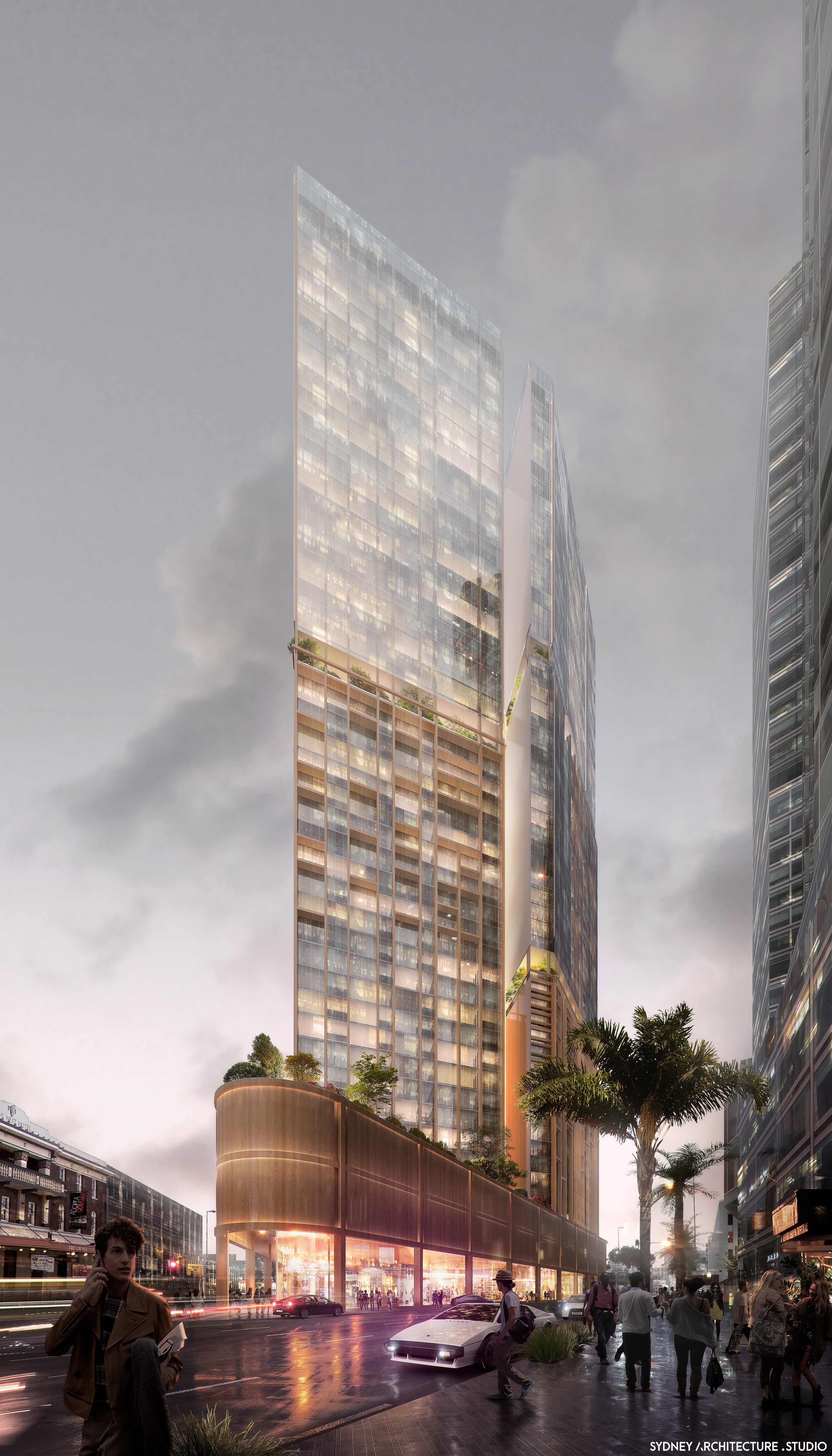
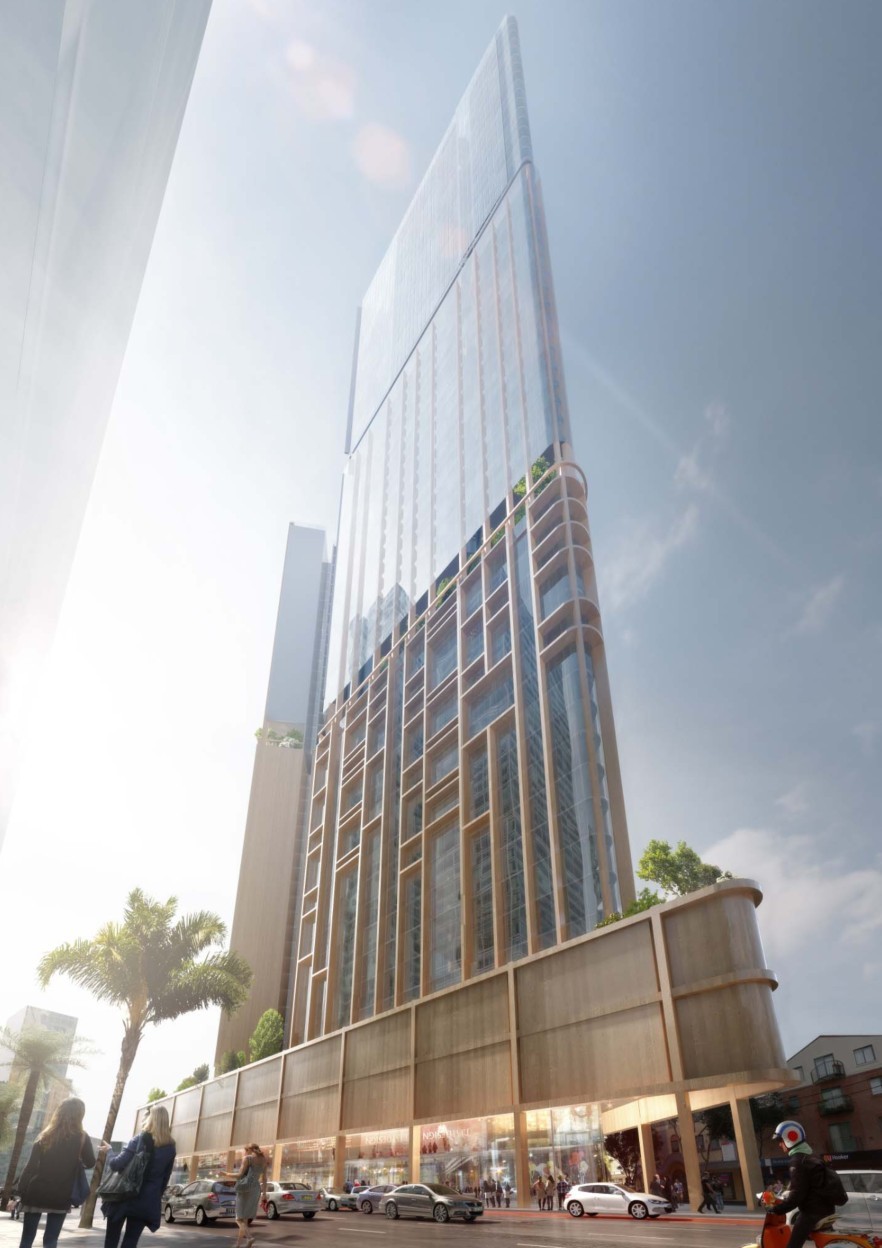
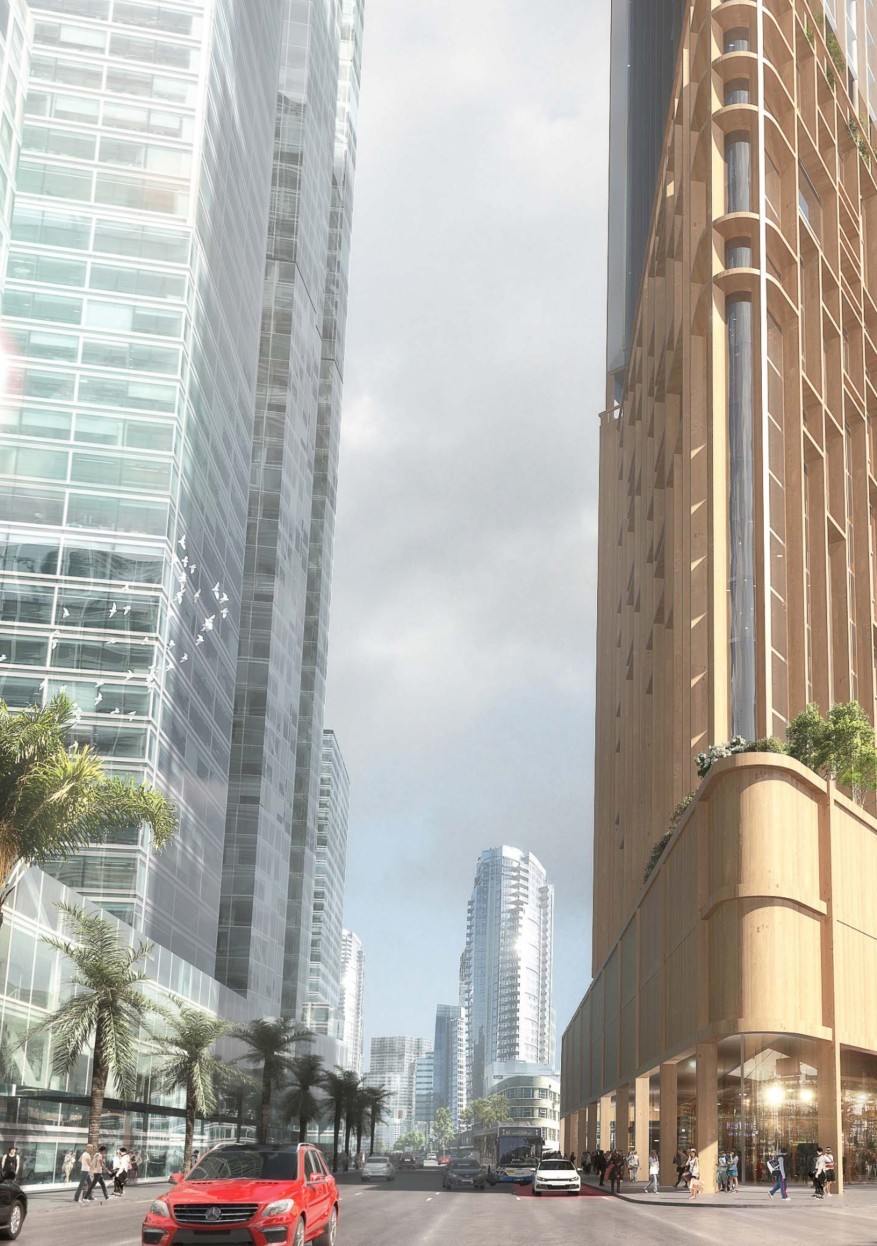
The triangle site, bounded by Falcon Pacific and Alexander, at the southern end of Willoughby Road has a major role to play in the future of the precinct. This site is the anchor to the village. As such it needs to encourage pedestrian movement up and down Willoughby Road. In this way, Slimlines ground plane and basement retail perform the same role as an “anchor tenant” in a large shopping mall to entice exploration of what’s on offer. This is an important role for the triangle site, as an anchor to the village “Eat Street.” The Podium and Streetscape Influences the form and articulation of the Slimlines podium responds to the immediate context and its role to support and enhance the existing urban streetscape. The architectural expression for the podium resonates with the neighbouring buildings’ mass, form, and articulation. There are two buildings of particular importance in our immediate context to which our work pays homage: The curved and highly articulated three-story form of the Heritage listed three-storey brick Crows Nest Hotel from 1929. This Edwardian facade is highly articulated & elaborate. It has three projecting balconies on decorative brackets with classical balustrades. The larger balconies divide two-storey fl at pilasters with Egyptian capitals. Punched windows feature twelve pane double hung timber sashes. At the upper levels set in arched openings at the First Floor with rendered panels to the arch. The Parapet profile to the street is a rendered frieze and cornice, with three pediments central to each façade. Willoughby House is on the adjacent corner to the Crows Nest Hotel. It is of a similar era, early 1930’s, but presents a progressive approach to architectural design. It too is curved. Dramatic yet straight-forward & imposing curved, the clean line form of this four-storey 1933 building is a well-recognized example of Interwar Functionalist architecture. Presently it has small format retail on the ground and commercial offices above. Of note is that building this is the former OJ Williams Store de-signed by T.D. Esplin and was a large-scale regional department store.
The triangle site, bounded by Falcon Pacific and Alexander, at the southern end of Willoughby Road has a major role to play in the future of the precinct. This site is the anchor to the village. As such it needs to encourage pedestrian movement up and down Willoughby Road. In this way, Slimlines ground plane and basement retail perform the same role as an “anchor tenant” in a large shopping mall to entice exploration of what’s on offer. This is an important role for the triangle site, as an anchor to the village “Eat Street.” The Podium and Streetscape Influences the form and articulation of the Slimlines podium responds to the immediate context and its role to support and enhance the existing urban streetscape. The architectural expression for the podium resonates with the neighbouring buildings’ mass, form, and articulation. There are two buildings of particular importance in our immediate context to which our work pays homage: The curved and highly articulated three-story form of the Heritage listed three-storey brick Crows Nest Hotel from 1929. This Edwardian facade is highly articulated & elaborate. It has three projecting balconies on decorative brackets with classical balustrades. The larger balconies divide two-storey fl at pilasters with Egyptian capitals. Punched windows feature twelve pane double hung timber sashes. At the upper levels set in arched openings at the First Floor with rendered panels to the arch. The Parapet profile to the street is a rendered frieze and cornice, with three pediments central to each façade. Willoughby House is on the adjacent corner to the Crows Nest Hotel. It is of a similar era, early 1930’s, but presents a progressive approach to architectural design. It too is curved. Dramatic yet straight-forward & imposing curved, the clean line form of this four-storey 1933 building is a well-recognized example of Interwar Functionalist architecture. Presently it has small format retail on the ground and commercial offices above. Of note is that building this is the former OJ Williams Store de-signed by T.D. Esplin and was a large-scale regional department store.
Crows Nest Slimlines
Type: Mixed Use High Rise Area: 35000 sqm Year: 2017 Period: 24 months Status: Unbuilt Location: Crows Nest, NSW, Australia
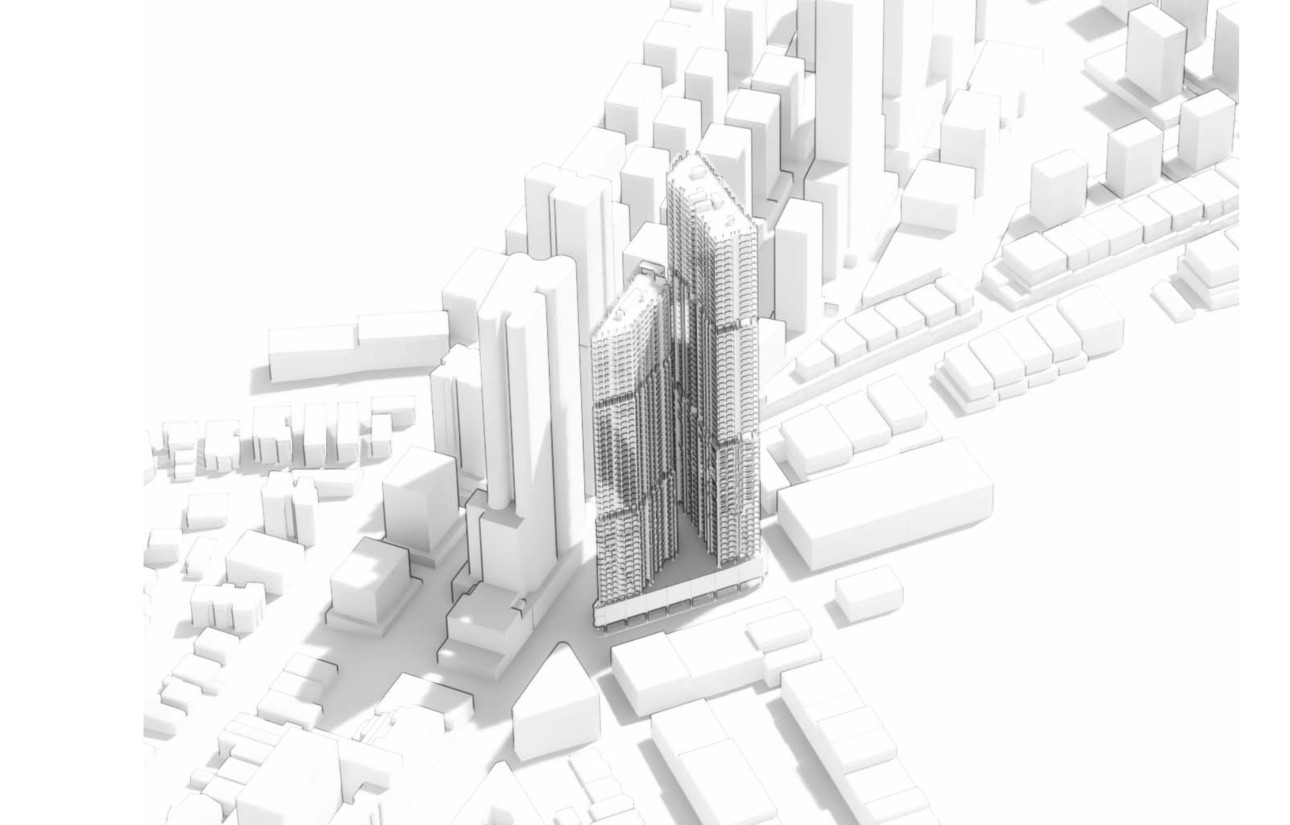
The triangle site, bounded by Falcon Pacific and Alexander, at the southern end of Willoughby Road has a major role to play in the future of the precinct. This site is the anchor to the village. As such it needs to encourage pedestrian movement up and down Willoughby Road. In this way, Slimlines ground plane and basement retail perform the same role as an “anchor tenant” in a large shopping mall to entice exploration of what’s on offer. This is an important role for the triangle site, as an anchor to the village “Eat Street.” The Podium and Streetscape Influences the form and articulation of the Slimlines podium responds to the immediate context and its role to support and enhance the existing urban streetscape. The architectural expression for the podium resonates with the neighbouring buildings’ mass, form, and articulation. There are two buildings of particular importance in our immediate context to which our work pays homage: The curved and highly articulated three-story form of the Heritage listed three-storey brick Crows Nest Hotel from 1929. This Edwardian facade is highly articulated & elaborate. It has three projecting balconies on decorative brackets with classical balustrades. The larger balconies divide two-storey fl at pilasters with Egyptian capitals. Punched windows feature twelve pane double hung timber sashes. At the upper levels set in arched openings at the First Floor with rendered panels to the arch. The Parapet profile to the street is a rendered frieze and cornice, with three pediments central to each façade. Willoughby House is on the adjacent corner to the Crows Nest Hotel. It is of a similar era, early 1930’s, but presents a progressive approach to architectural design. It too is curved. Dramatic yet straight-forward & imposing curved, the clean line form of this four-storey 1933 building is a well-recognized example of Interwar Functionalist architecture. Presently it has small format retail on the ground and commercial offices above. Of note is that building this is the former OJ Williams Store de-signed by T.D. Esplin and was a large-scale regional department store.