Sydney Football Stadium
Type: Stadium & Performance Venue Area: 100000 sqm Year: 2018 Period: 4 months Status: Unbuilt Location: Moore Park, NSW, Australia
Type: Stadium & Performance Venue Area: 100000 sqm Year: 2018 Period: 4 months Status: Unbuilt Location: Moore Park, NSW, Australia

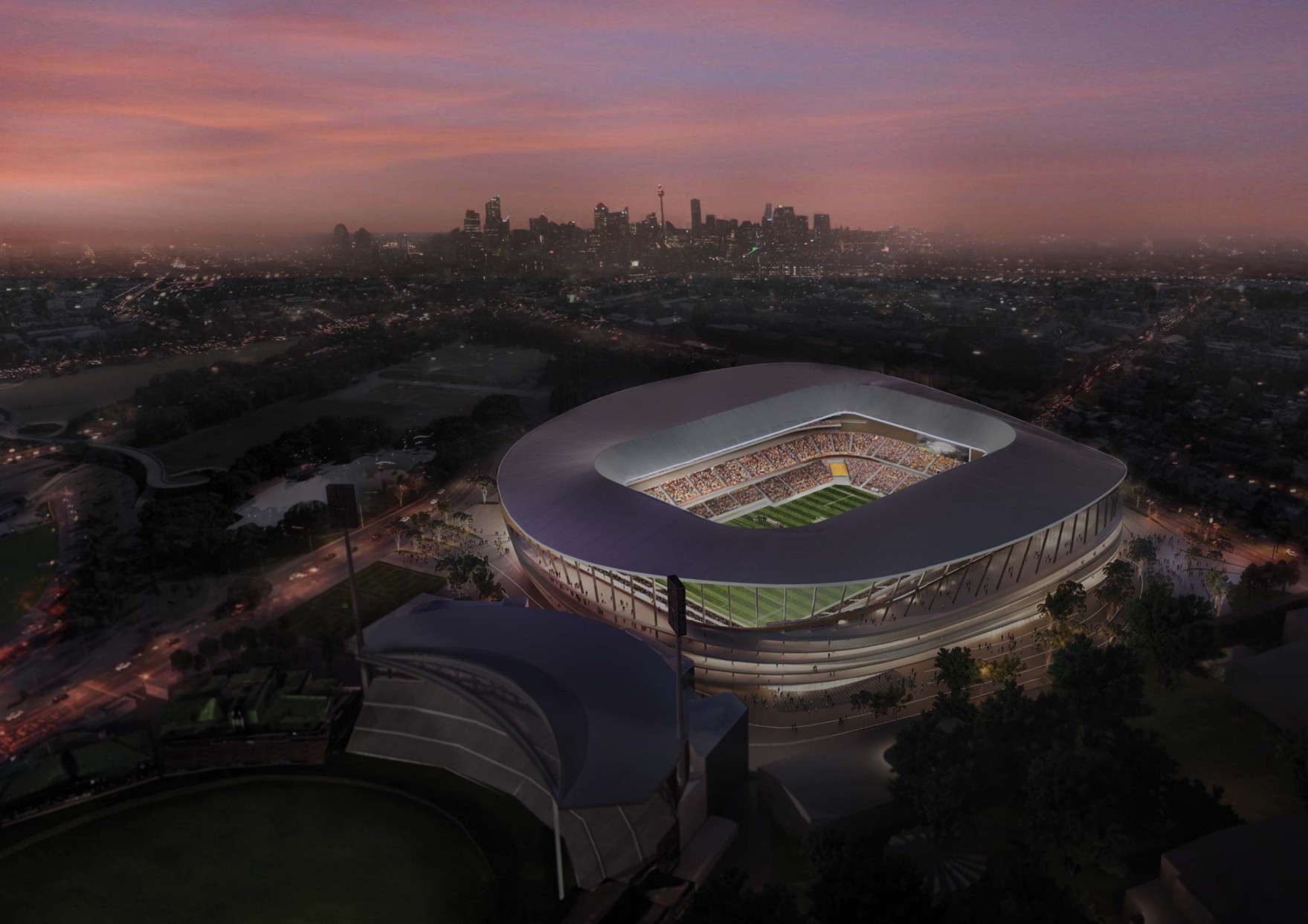
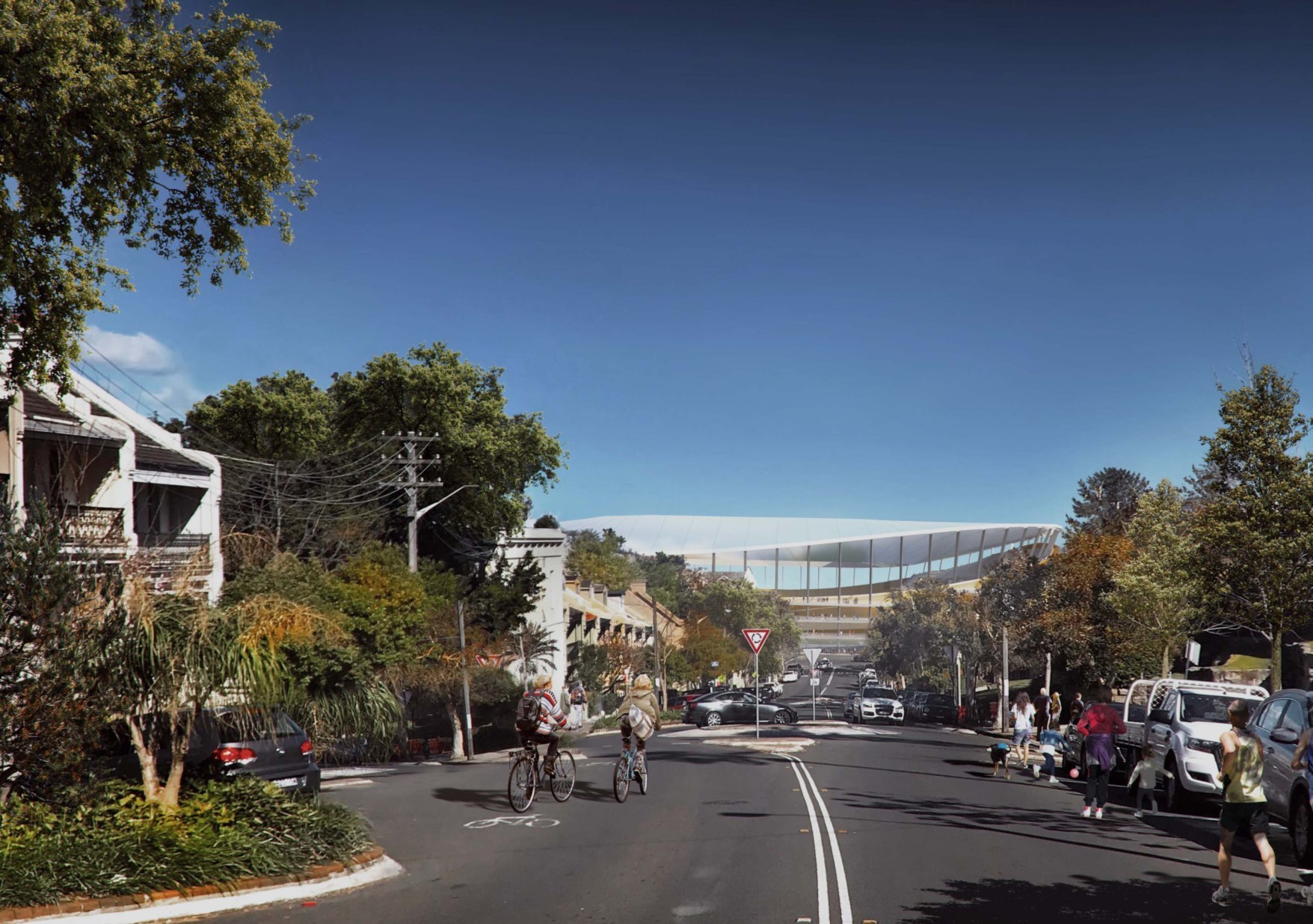
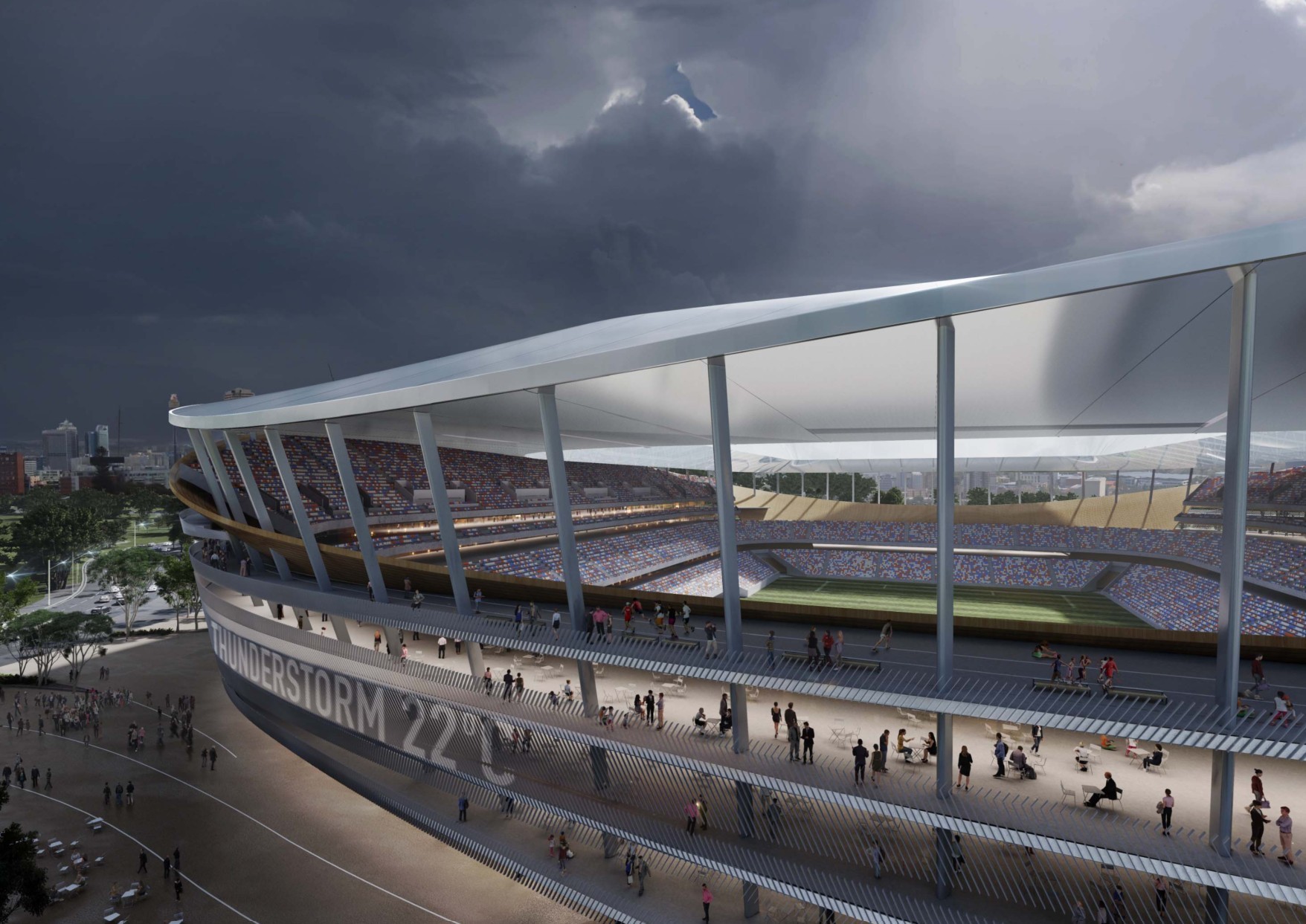
This project reimagines the stadium as a civic landscape — a public building that belongs to the city every day, not only on event days. Rather than operating as an inward-focused object, the stadium is conceived as an extension of the surrounding parklands, offering generous public space, clear urban connections, and ongoing community use. Responding to the scale and sensitivity of its setting, the design carefully moderates bulk and height, particularly along residential edges, and stitches the building into its context through landscape, movement, and visual permeability. The ground plane is treated as a continuous public surface, extended upward into accessible concourses that remain active in non-event mode, allowing the stadium to function as a shared civic “front yard.” The architectural language is driven by the concept of flow, referencing the site’s historic relationship to water and landscape. A lightweight tensioned roof structure follows a gentle, flowing profile that reduces perceived scale, improves acoustic performance, and expresses rainwater as a poetic response to the site’s hydrological history. A restrained material palette and layered façade strategy deliver a robust, legible, and cost-effective civic architecture. Together, these elements create a stadium that is inclusive, memorable, and deeply connected to its place — a contemporary public building designed for long-term community value.
This project reimagines the stadium as a civic landscape — a public building that belongs to the city every day, not only on event days. Rather than operating as an inward-focused object, the stadium is conceived as an extension of the surrounding parklands, offering generous public space, clear urban connections, and ongoing community use. Responding to the scale and sensitivity of its setting, the design carefully moderates bulk and height, particularly along residential edges, and stitches the building into its context through landscape, movement, and visual permeability. The ground plane is treated as a continuous public surface, extended upward into accessible concourses that remain active in non-event mode, allowing the stadium to function as a shared civic “front yard.” The architectural language is driven by the concept of flow, referencing the site’s historic relationship to water and landscape. A lightweight tensioned roof structure follows a gentle, flowing profile that reduces perceived scale, improves acoustic performance, and expresses rainwater as a poetic response to the site’s hydrological history. A restrained material palette and layered façade strategy deliver a robust, legible, and cost-effective civic architecture. Together, these elements create a stadium that is inclusive, memorable, and deeply connected to its place — a contemporary public building designed for long-term community value.

Sydney Football Stadium
Type: Stadium & Performance Venue Area: 100000 sqm Year: 2018 Period: 4 months Status: Unbuilt Location: Moore Park, NSW, Australia
This project reimagines the stadium as a civic landscape — a public building that belongs to the city every day, not only on event days. Rather than operating as an inward-focused object, the stadium is conceived as an extension of the surrounding parklands, offering generous public space, clear urban connections, and ongoing community use. Responding to the scale and sensitivity of its setting, the design carefully moderates bulk and height, particularly along residential edges, and stitches the building into its context through landscape, movement, and visual permeability. The ground plane is treated as a continuous public surface, extended upward into accessible concourses that remain active in non-event mode, allowing the stadium to function as a shared civic “front yard.” The architectural language is driven by the concept of flow, referencing the site’s historic relationship to water and landscape. A lightweight tensioned roof structure follows a gentle, flowing profile that reduces perceived scale, improves acoustic performance, and expresses rainwater as a poetic response to the site’s hydrological history. A restrained material palette and layered façade strategy deliver a robust, legible, and cost-effective civic architecture. Together, these elements create a stadium that is inclusive, memorable, and deeply connected to its place — a contemporary public building designed for long-term community value.